A web app with its own engine.
ceri runs your HTML, CSS and JavaScript on a Rust engine that ships inside the app. No Chromium. No WebView2. One process.
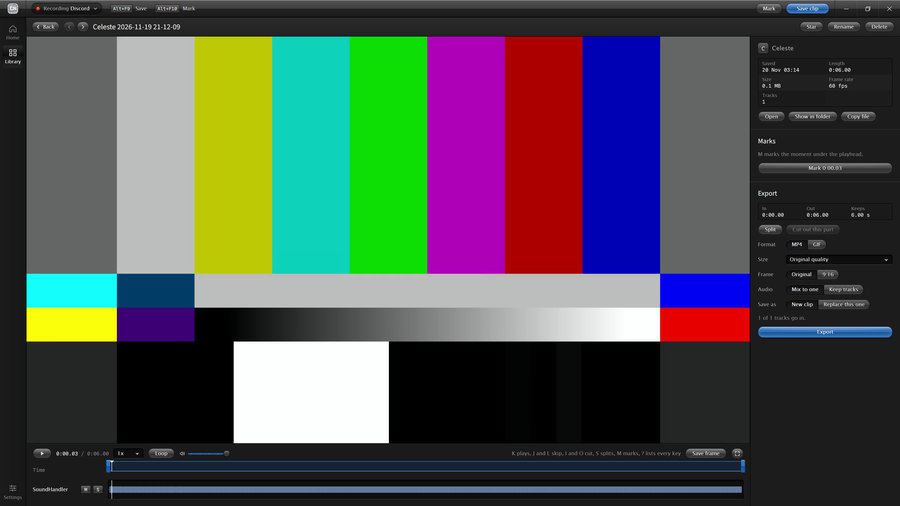
Seven processes became one.
clip, Windows x64 at 1.5x, 20 November 2026
clip, a game clip recorder, shipped on Tauri first. Its ceri port was measured against that Tauri build on the same machine.
| Measure | Tauri on WebView2 | ceri |
|---|---|---|
| Processes | 7 | 1 |
| Working set | 376 MB | 179 MB |
| Private bytes | 296 MB | 216 MB |
| Window asked for to a drawn shell | 787 ms | 565 ms |
| CPU over 20 s idle on the home screen | 16 ms | 0 ms |
| CPU to play a 6 s clip in the editor | 4.69 s | 4.08 s |
Tauri numbers are clip's Tauri release; ceri numbers are its ceri port. Both ran the same screens on the same Windows machine.
Nothing underneath.
The engine is written against the Rust standard library. There is no Chromium, WebKit, Servo, WebView2 or borrowed JavaScript engine under it, and no system webview to install first.
The whole runtime
ceri.exe from the 22 November release build, engine included: 17,028,608 bytes. The CEF build it replaced was 411 MB in 252 files.
One process
Window, engine, scripts and workers live in one process. clip on Tauri started seven.
Idle means idle
The engine sleeps until a timer, an animation or input is due. Twenty idle seconds on clip's home screen cost no CPU time.
Same pixels
clip's eight screens match its WebView2 build at 1x, 1.5x and 2x, within 0.5% of pixels at a CIEDE2000 distance of 2.0.
Coming from Tauri.
Commands, capabilities, invoke, listen and emit keep their shape. A command takes named camelCase arguments the way a Tauri command does, and a page calls it the same way. The app loads from its own HTTPS origin, with no loopback server and no Node.js.